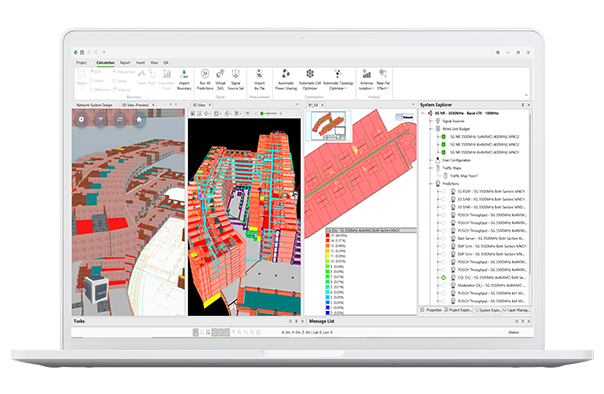
From ambitious vision to engineering reality: how researchers are evaluating where THz belongs in future 6G networks.
What makes 6G different?
As the telecommunications industry looks beyond 5G, it is becoming increasingly clear that 6G will represent far more than another incremental increase in speed or capacity. Rather than simply delivering faster mobile broadband, 6G is expected to integrate communications, sensing, artificial intelligence, and distributed computing into a unified network architecture capable of supporting entirely new classes of applications.
Researchers anticipate data rates approaching the terabit-per-second range, latency measured in microseconds, and positioning accuracy within a few centimetres. These performance gains could enable immersive holographic communication, intelligent robotics, collaborative autonomous systems, and integrated sensing and communication.
To achieve these ambitious objectives, researchers are focusing on several key technologies:
- Terahertz (THz) frequencies (0.1–10 THz): Vast spectrum resources with potential for extreme data rates.
- Reconfigurable metamaterials: Antenna technologies that can dynamically direct and shape signals.
- Communication-sensing integration: Networks that both connect and interpret their environment.
Why Terahertz is at the Core of 6G Research
Situated between microwave and infrared light, the terahertz spectrum offers enormous bandwidth that could support wireless data rates previously considered impractical. This has made THz communications one of the most heavily researched areas within 6G.
However, exploiting THz frequencies presents significant engineering challenges. Higher frequencies experience greater atmospheric absorption, increased scattering, limited propagation distances and greater sensitivity to blockage. These characteristics demand entirely new approaches to network design, beam management and radio planning.
To address these challenges, European research initiatives are uniting universities, telecom equipment vendors, mobile network operators, and radio access network planning software providers such as Ranplan Wireless to investigate how THz communications can move from a scientific opportunity towards practical deployment.
Two examples include:
- TWIN6G focuses on the migration towards the sub-terahertz spectrum and the use of reconfigurable metamaterial transceivers, and integrating communication and sensing functionalities.
- TERAWIRELESS explores XL-MIMO technology, semantic communications, and physics-informed machine learning to develop THz systems with optical speed performance. The project also investigates low-scattering THz channels and communication-sensing integration to overcome key deployment barriers.
Tackling Terahertz Complexity with Digital Twins and AI
Despite its promising deliverables, designing THz-enabled 6G networks is far more complex than previous generations of wireless systems. Conventional planning approaches struggle to accurately model propagation behaviour, beamforming interactions and dynamic radio environments at these frequencies.
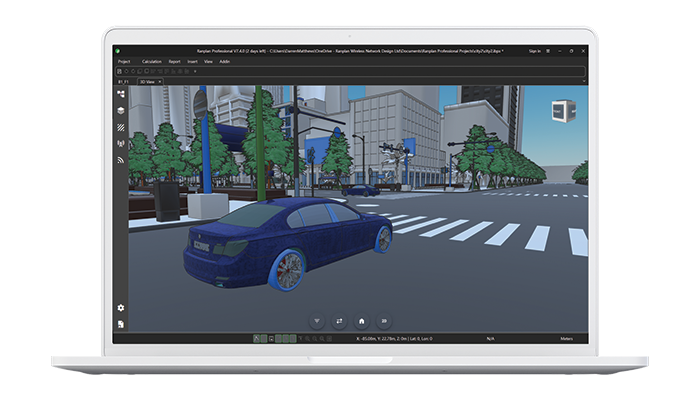
Digital Twins (DTs) and Machine Learning (ML) are being developed as essential tools to explore this complexity:
- Digital Twins create a virtual representation of real-world environments, enabling engineers to experiment with THz propagation, interference, mobility, and deployment strategies. Combined with advanced simulation, they provide repeatable research environments that would be impractical or prohibitively expensive to recreate physically.
- AI/ML models provide faster, more adaptive solutions for resource allocation, beamforming, and error correction.
For example, TWIN6G is developing the world's first open-access digital twin emulator for 6G network design, enabling real-time modelling and optimization and delivering insights into network behaviour.
Innovative Applications Driving THz Research
The higher data rates and low latency offered by terahertz frequencies could unlock a plethora of innovative applications that extend far beyond today's mobile broadband services, such as:
- Real-time holographic avatars for communication and training.
- Autonomous transport systems that rely on instant decision-making.
- Remote healthcare and telesurgery, where latency must be imperceptible.
- Semantic communications, where networks transmit the meaning of data rather than every bit, reducing load and improving efficiency.
TERAWIRELESS is at the forefront of semantic and goal-oriented communications, embedding meaning and intent directly into the communication process to deliver more efficient, reliable THz systems.
Integrating Terahertz into Network Infrastructures
THz communications are not expected to replace today’s wireless spectrum. Instead, they are likely to complement existing sub-6 GHz, mmWave, and optical infrastructures, with each technology serving different deployment scenarios.
Achieving this requires new approaches to interoperability, resource management and distributed intelligence across wireless and optical infrastructure.
NEWTON, another EU-funded research project involving Ranplan, is developing a converged wireless-optical network architecture that leverages cell-free (CF) technology for high-density and high-coverage deployments. By focusing on AI-driven models for resource allocation and efficient network management, NEWTON aims to achieve sub-second latency and high connection density, making it easier to integrate terahertz technology into existing infrastructures.
From THz Ambition to Engineering Reality
As THz research continues to mature, researchers are increasingly exploring a broader set of questions. Rather than asking simply whether THz can deliver terabit-per-second data rates, researchers are increasingly exploring a broader set of questions. Where does THz provide genuine engineering value? How should it coexist with lower-frequency spectrum? Will future AI-native networks always require continuously increasing transmission capacity, or will advances in semantic communications and distributed intelligence fundamentally change how information is exchanged?
These questions are helping shape the next phase of 6G research.
Will Future Networks Always Need More Bandwidth?
Although THz communications have emerged as one of the most prominent research directions for 6G and beyond networks, whether they will eventually achieve large-scale commercial adoption remains uncertain. THz frequencies offer enormous bandwidth and the potential for ultra-high data rates, making them attractive for applications such as holographic communications, immersive extended reality, and high-resolution sensing.
However, future wireless systems may not necessarily require continuous transmission of massive volumes of raw bits. With the growing development of semantic communications, the focus of wireless networks is gradually shifting from bit-level delivery towards the transmission of task-relevant and semantic information. In many future applications, accurately conveying meaning, intent, or inference outcomes may become more important than transmitting every individual data bit with perfect fidelity.
Energy Efficiency May Become the Bigger Challenge
Another important consideration is energy efficiency, which is expected to become a fundamental design objective for future 6G systems. Although THz communications can theoretically provide extremely high throughput, they are not always energy-efficient due to severe propagation losses, high hardware complexity, and the substantial signal processing overhead associated with ultra-wideband operation. As wireless networks continue to scale in terms of connected devices, sensing capabilities, and AI-driven services, simply increasing transmission capacity without considering energy consumption may become economically and environmentally unsustainable. Consequently, THz communications may ultimately be reserved for highly specialised scenarios rather than becoming a universally deployed access technology.

AI is Reshaping Future Network Architectures
In addition, future network architectures are likely to fundamentally rebalance where energy is consumed across the overall communication system. Traditionally, a large proportion of network energy consumption has occurred within the radio access network (RAN), particularly at base stations and wireless transmission interfaces. However, future 6G systems are expected to distribute intelligence more dynamically across radio access, mobile edge computing, and cloud or core network infrastructures. Rather than relying primarily on high-rate wireless transmission, future architectures may increasingly exploit local processing, distributed AI inference, edge caching, and collaborative computing to reduce unnecessary data movement across the network.
This evolution is closely connected to the rise of generative AI and neural content reconstruction. Many forms of future multimedia, environmental, and contextual information may no longer need to be transmitted explicitly as large raw datasets. Instead, compact semantic representations, latent features, prompts, or world models could be transmitted and subsequently reconstructed locally using generative neural networks at the edge or device side. Such model-assisted communication paradigms could dramatically reduce communication overhead while improving scalability and overall system efficiency. Consequently, the long-term evolution of 6G may depend less on continuously expanding raw transmission bandwidth and more on the intelligent integration of communications, computing, AI, and semantic information processing.
What This Means for THz Research
These developments do not diminish the importance of THz research. Instead, they broaden the questions researchers are trying to answer. The objective is no longer simply to maximise wireless capacity, but to determine where THz communications provide meaningful engineering advantages, how they complement AI-native network architectures, and how communications, computing and semantic information processing can be intelligently integrated to build practical, efficient and sustainable 6G systems.
Ranplan’s Role in Advancing 6G Research
Answering these questions requires more than theoretical analysis. Researchers need realistic environments where THz propagation, semantic communications, AI-driven optimisation and emerging 6G architectures can be modelled, evaluated and compared under repeatable conditions. This is where digital twins and advanced wireless simulation play a critical role.
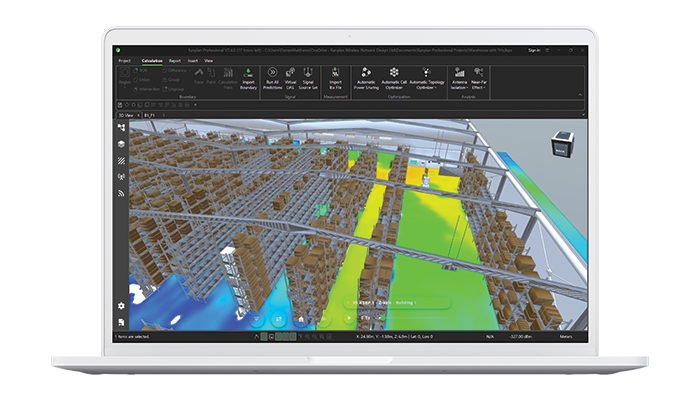
Ranplan provides a research-to-deployment environment that enables researchers to evaluate, validate and translate emerging 6G concepts into practical network designs. By combining BIM, GIS and CAD imports with advanced 3D ray-tracing and AI-driven optimisation, Ranplan creates realistic digital twins where THz communications and other emerging 6G technologies can be explored under real-world conditions.
The transition to 6G will not be defined by a single breakthrough but rather by the convergence of advances in physics, materials, AI and software. Ranplan bridges research and deployment by providing the digital twin environment needed to investigate where and how emerging 6G technologies—including THz communications—deliver the greatest value, helping researchers transform innovative concepts into evidence-based engineering decisions.
Author:



Equip Your Research Teams with Ranplan Academic to Drive Wireless Innovation